
Cheddar Man: a view into Britain’s past
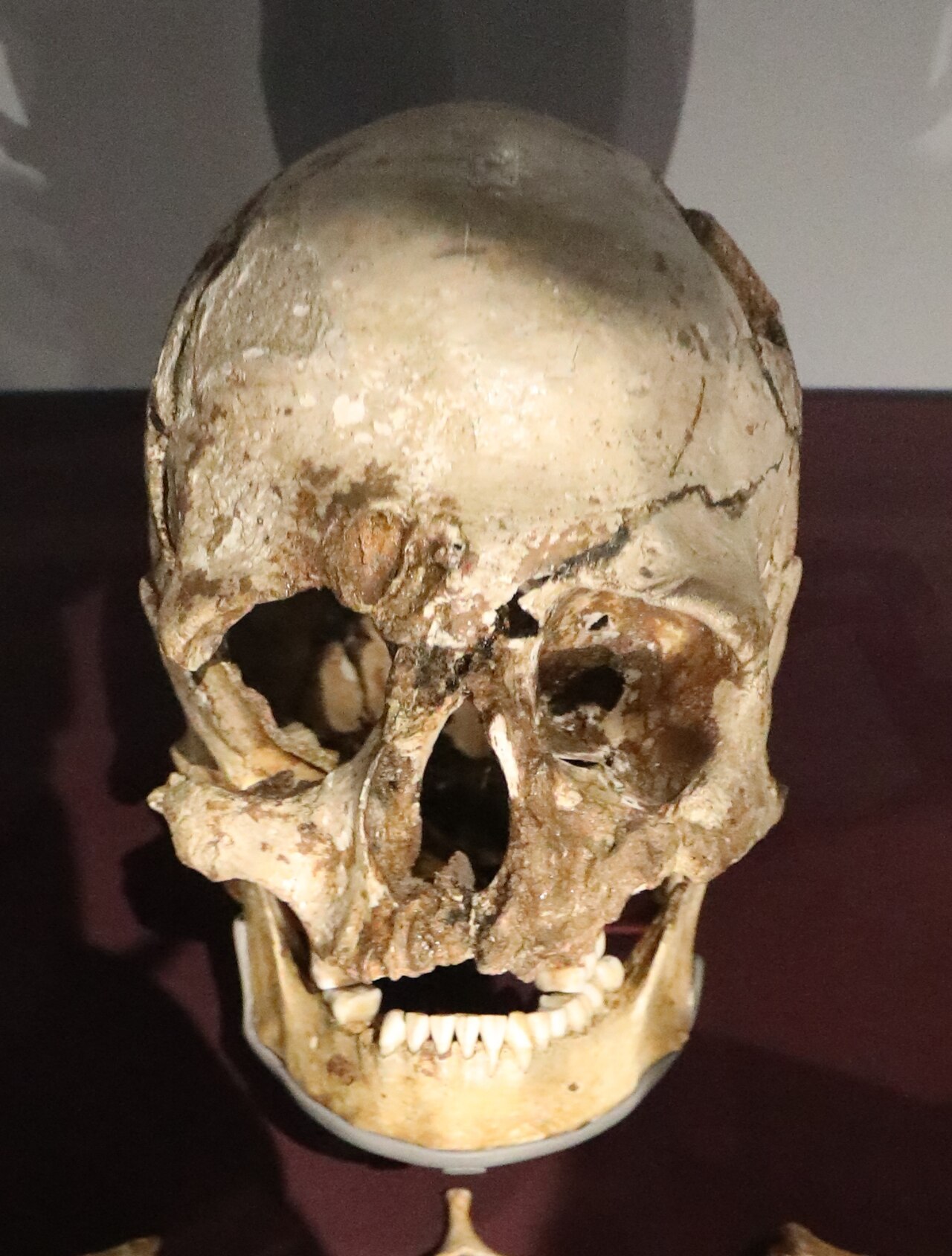
In 1903, an almost complete human skeleton was found in Gough’s Cave in Cheddar Gorge, Somerset, England. The person lived around 10,000 years ago, in the , long before farming spread across Britain. Known as Cheddar Man, he is among the best-preserved human remains from this period on the island. But he was not the “first Briton”: people had lived in the region before him.
An analysis of , presented in 2018, let researchers estimate some aspects of his appearance. The most likely reconstruction shows dark skin and light, probably blue, eyes. Genetic evidence is not a photograph, however: it cannot reliably reveal a precise skin shade from a handful of known gene variants. This is a strong inference, but it remains an estimate based on current knowledge of how genes relate to traits.
Why did the find attract so much attention? It showed that in northwestern Europe need not have looked like the populations living there today. Their genetic makeup also differed from that of farmers who arrived later. At the same time, Cheddar Man does not represent everyone in his era: variants associated with lighter pigmentation already existed in other European and West Asian populations.

Philippa Crabbe · CC BY 2.0 · Sources ↗ · Image terms ↗
What gives skin its colour?
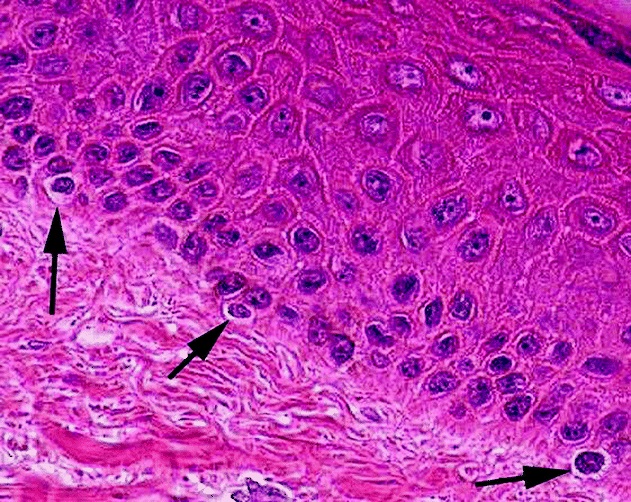
Human skin colour depends chiefly on the amount, kind and distribution of , a pigment made by in the lower part of the . pass pigment to neighbouring skin cells. People of different complexions generally do not have dramatically different numbers of . More important is how much pigment is made, what particles contain it and how those particles are distributed.
absorbs and scatters some ultraviolet radiation, reducing damage to skin and DNA. Yet it does not provide complete protection: anyone can burn or develop an illness related to UV exposure. Pigmentation is an adaptation that changes the probability of harm, not an impenetrable shield.
Setijanti H.B., Rusmawati E., Fitria R., Erlina T., Adriany R., Murtiningsih · CC BY 4.0 · Sources ↗ · Image terms ↗
Our distant African ancestors left no preserved skin samples from which to read their colour directly. Researchers therefore combine the genetics of living populations with fossils, the evolution of body hair and ecological evidence. It is likely that thinning body hair and more effective sweating during the evolution of the genus Homo increased the skin’s exposure to sunlight and favoured stronger pigment protection. Neither the exact date when a dense body covering was lost nor one single activity responsible for the change has been established. “Persistence hunting” cannot therefore be presented as a proven, sole cause.
Diversity within Africa itself also matters. Genetic studies reveal long histories of both darker and lighter pigmentation variants on the continent. The claim that every early Homo sapiens had exactly the same, very dark skin goes beyond the available evidence.
Sunlight: protection and necessity
The Sun’s rays start the production of a precursor in the skin. The liver and kidneys then help turn the substance into active forms. helps regulate calcium and phosphate, and thus the mineralization of bones. A severe deficiency in childhood can lead to rickets. UV exposure therefore brings both a useful biological reaction and a risk of injury; neither side of that balance should be omitted.
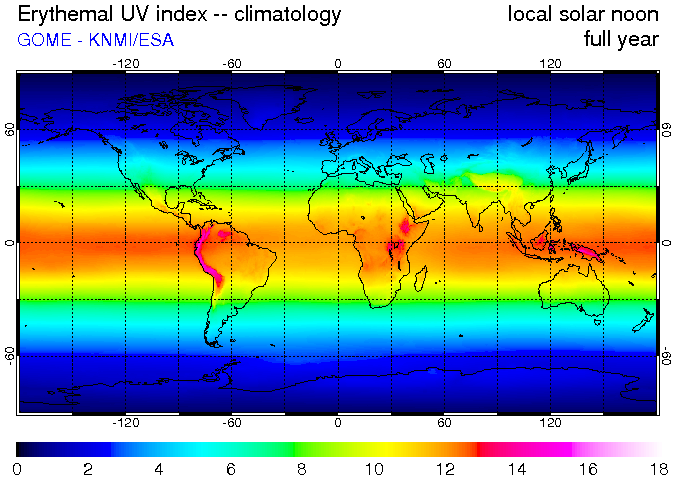
KNMI · javno vlasništvo · Sources ↗
At higher latitudes the Sun stays lower in the sky for part of the year. must travel through more atmosphere, so more of it is absorbed. During winter, skin in many northern places produces little . This does not mean production is literally zero everywhere, or that every person with darker skin inevitably becomes ill. The amount depends on season, cloud cover, altitude, clothing, time outdoors, age, diet and pigmentation.
An influential hypothesis proposes that, under intense UV exposure, pigment also helps preserve , vitamins needed for DNA synthesis and embryonic development. Scientists still debate how much this mechanism contributed to the evolution of skin colour. They therefore consider a possible balance: enough pigment to offer protection where UV is strong, but not so much that it greatly hinders production where is weak. This is a useful evolutionary framework, not a mathematical formula that assigns fixed percentages to every continent and person.
Can diet change the equation?
need not come only from the skin. Oily fish and fish oil are among its richest natural sources, while eggs and liver contain smaller amounts. Diet and way of life could therefore influence how important pigmentation was in a given environment. A community that frequently eats oily fish and one whose diet contains little do not face the same nutritional conditions, even at similar latitudes.
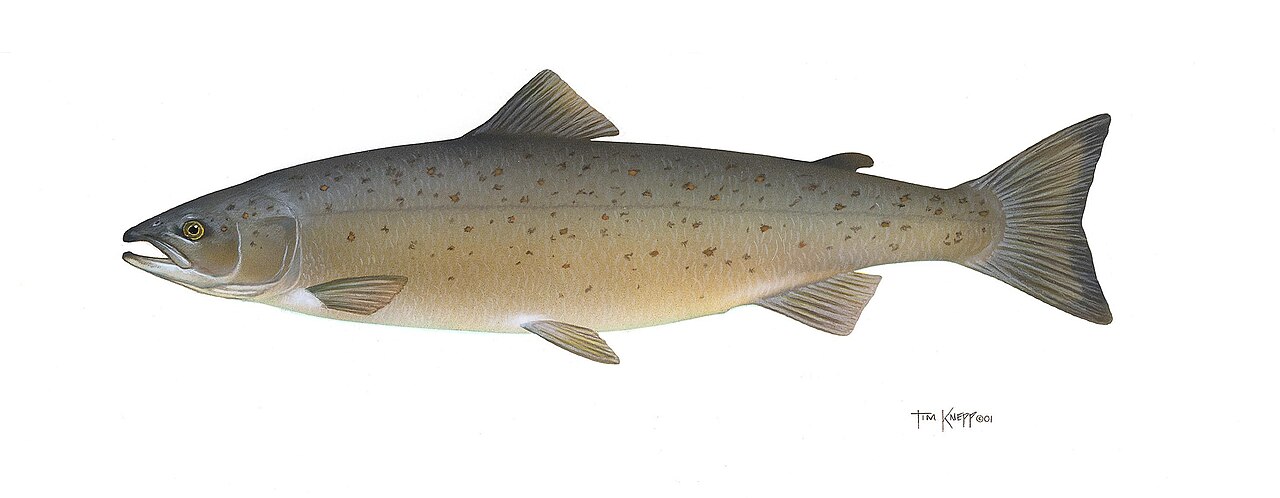
Timothy Knepp, U.S. Fish and Wildlife Service · javno vlasništvo · Sources ↗
But we do not know that all European hunter-gatherers regularly ate enough fish or marine mammals. Their diets varied with location, season and food availability. Nor does Cheddar Man’s probable dark skin prove that his diet “completely compensated” for weaker sunlight. Diet is a possible part of the explanation, not a directly measured fact about him.
For many communities, the transition to farming meant more grain and a changed access to wild food. Early farmers did not, however, live on porridge alone: they kept animals and in some places still hunted or fished. The effect of diet on the evolution of pigmentation cannot be reduced to “farming arrived, and disappeared.”
Genes, farming and great migrations
One gene associated with pigmentation differences is . Its protein participates in the work of , and one variant is strongly linked to lighter skin in many present-day European populations. It is not the only “skin-colour gene.” Other genes, including and , also matter, along with their combinations.
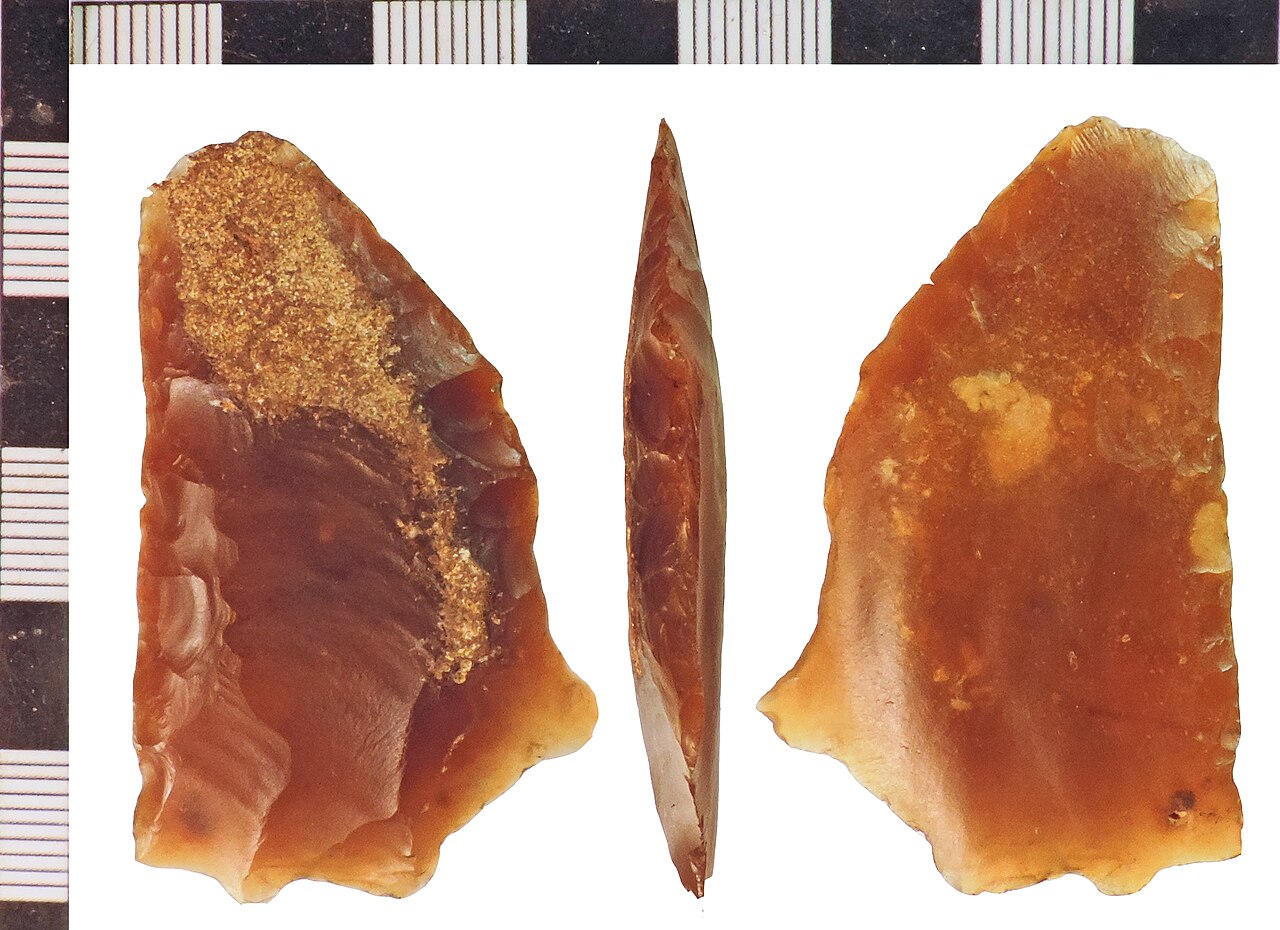
North Lincolnshire Museum, Martin Foreman, 2016-03-22 13:33:27 · CC BY 2.0 · Sources ↗ · Image terms ↗
Ancient genome studies show that the variant associated with lighter skin was already very common among farmers in Anatolia before their descendants and genetic variants spread through Europe. In other words, there is no evidence that the crucial mutation first arose in “one European farmer” only after a change of diet. Migration strongly influenced how common the variant became in Europe, followed by acting on several genes. For some other pigmentation variants, such as those in , signals of are particularly strong.
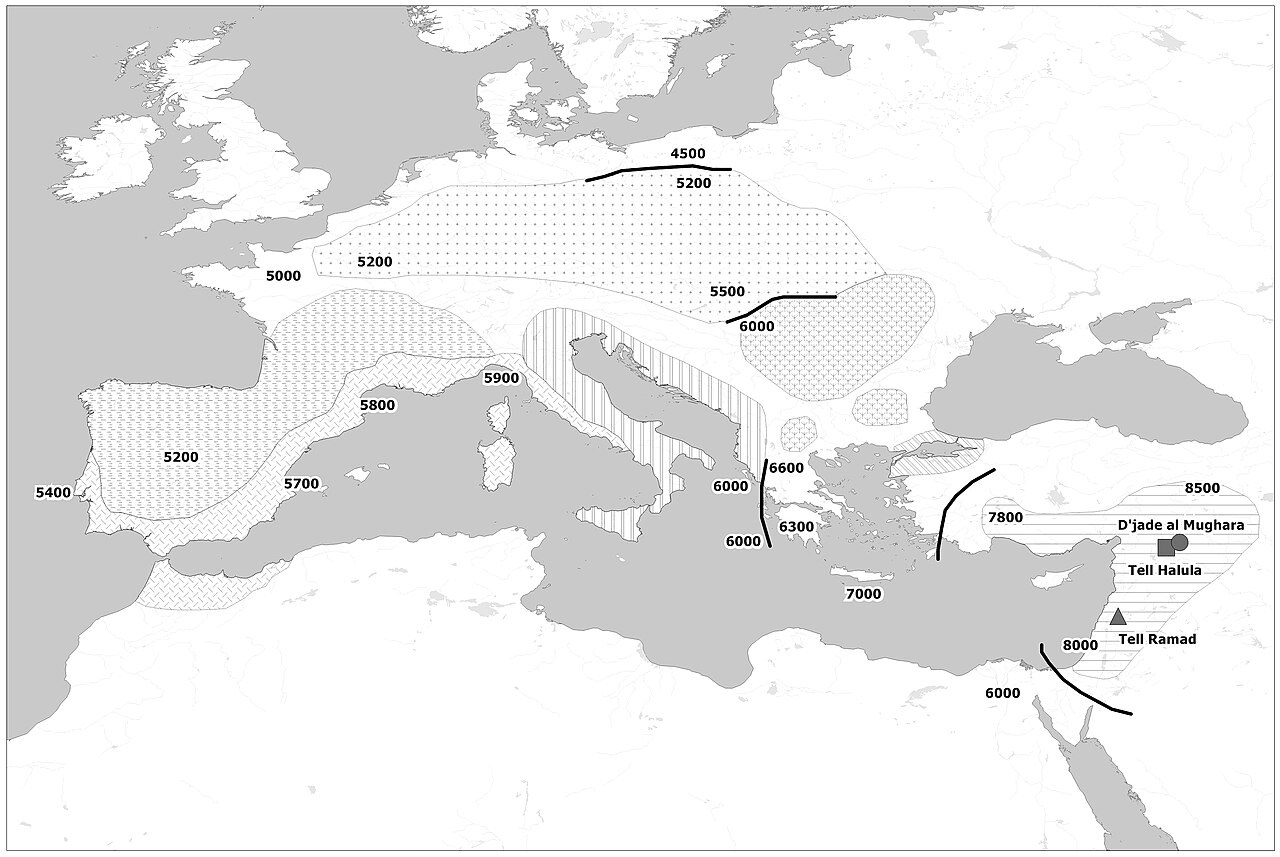
Eva Fernández , Alejandro Pérez-Pérez, Cristina Gamba, Eva Prats, Pedro Cuesta, Josep Anfruns, Miquel Molist, Eduardo Arroyo-Pardo, Daniel Turbón · CC BY 4.0 · Sources ↗ · Image terms ↗
means that an inherited trait may affect how many descendants people leave under particular conditions. is different: a chance change in the frequency of a genetic variant, especially in small populations. Migration, selection and the complex history of population mixing all matter to skin colour in Europe. There is no reliable universal period of “150 to 250 generations” during which one gene completed the entire process alone.
Different routes to similar complexions
Lighter skin in more northern parts of East Asia is not simply a copy of Europe’s genetic history. Some pigmentation-related variants have different frequencies there, and changes in genes such as are also significant. Researchers therefore speak of partly independent genetic paths. This recalls : similar traits can arise through different genetic changes when populations face somewhat similar conditions.
Even that process is not a perfectly repeated equation. People followed different historical routes, while diets, clothing, settlements and social choices changed. Differences between populations do not form sharp borders. Skin colour varies gradually; every broad geographic region contains many shades. Today’s humans cannot be scientifically divided into a few biologically separate “races” on the basis of complexion.
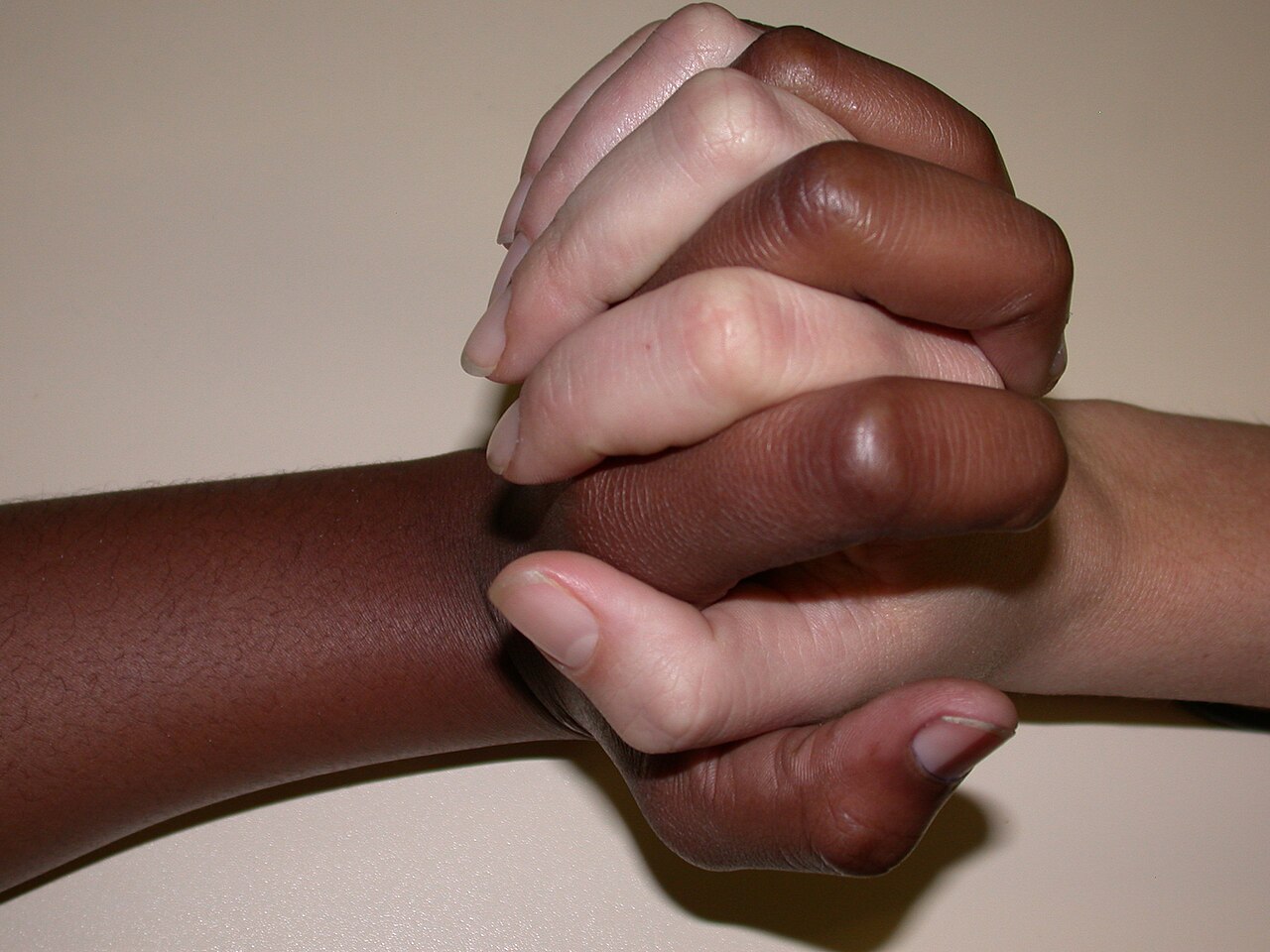
Frerieke from The Hague, The Netherlands · CC BY 2.0 · Sources ↗ · Image terms ↗
Cheddar Man, then, does not reveal one secret that explains everybody’s skin. Instead, he opens a more interesting question: how have sunlight, diet, inheritance and migration intertwined over thousands of years? The answer is recorded in bones, and living populations. We read it cautiously, distinguishing what has been measured from what we are still trying to explain.